
Overview
For this project, my team redesigned an everyday hand tool to make it more ergonomically viable for users experiencing temporary or situational physical limitations. We chose to focus on tongs because they require repeated gripping, wrist rotation, and controlled pressure during common cooking tasks. Our goal was to improve the comfort, control, and usability of the tool while still preserving its core function. Through task analysis, sketching, foam modeling, user testing, and CAD rendering, we developed a final tong design that better supports natural hand and wrist movement.
TIME
4 Weeks
YEAR
2026
Skill
CAD
Ergonomic ANalysis
Rapid Protoyping

We began by analyzing how users normally interact with kitchen tongs during tasks like picking them up, gripping food, transferring food, and releasing it onto a plate. This helped us identify key ergonomic issues, including wrist deviation, awkward thumb placement, pressure on the fingers, and reduced control during scooping or gripping motions. We also considered anthropometric differences, making sure the redesign could work for a range of hand sizes rather than only one ideal user. From this research, we created design requirements focused on neutral wrist posture, comfortable grip geometry, intuitive thumb placement, and reliable control during use.
For This project i also wore a wrist brace for 4 days to put myslef in the users shoes and better understand what they were dealing with
Empathize


Define + Ideate
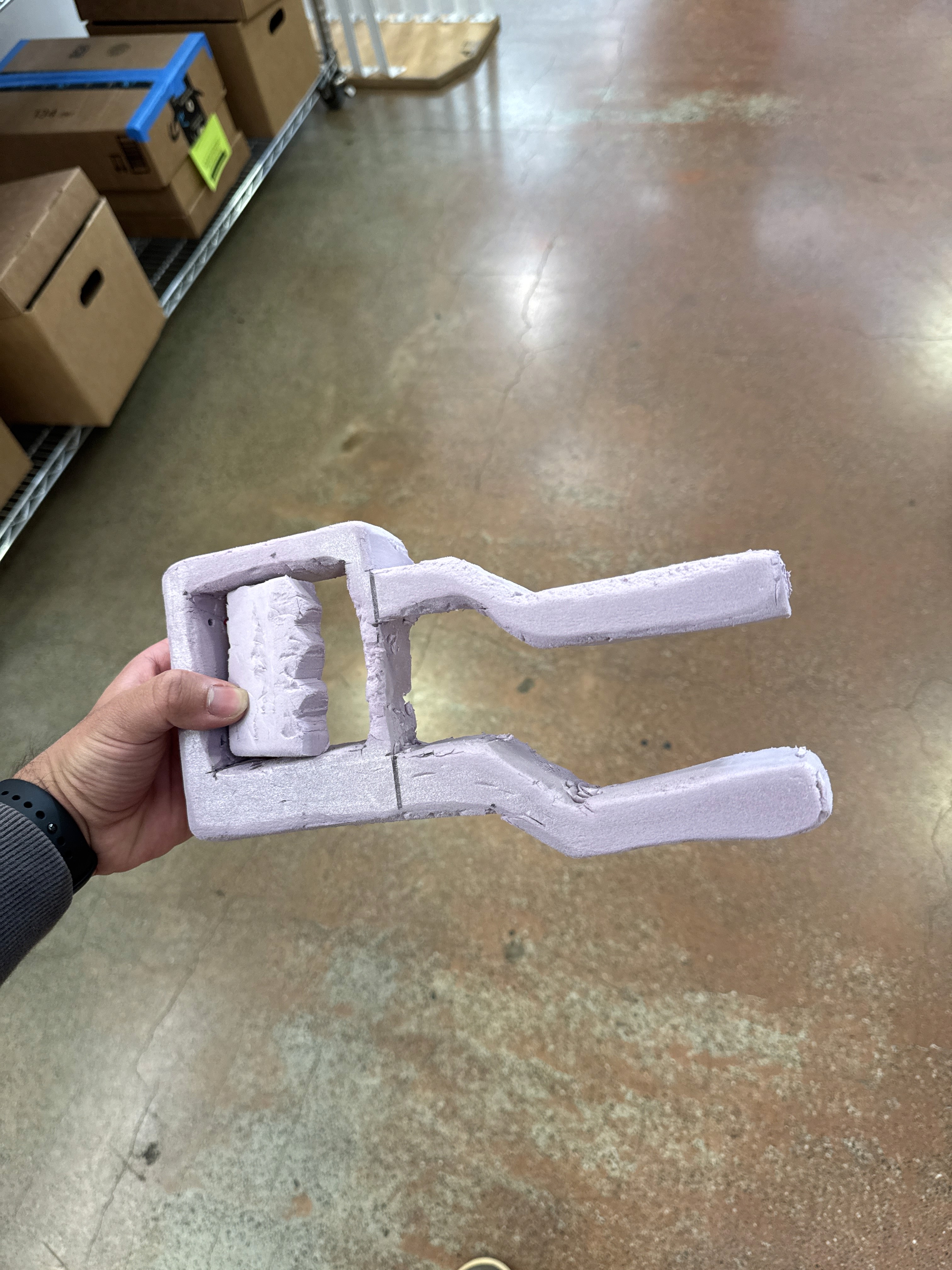
After defining the problem, we generated a wide range of concept sketches to explore different forms, grip styles, handle angles, and scooping mechanisms. These early concepts allowed us to test very different approaches before narrowing down the design direction. We then translated selected sketches into low-fidelity foam models, which helped us quickly evaluate the physical feel of each design in the hand.


Prototype + Test
We tested our foam prototypes with users who had experience using kitchen tongs, asking them to complete representative scooping and grasping tasks. During testing, we collected feedback through observation, RULA posture analysis, hand and wrist pressure mapping, and short interviews. The feedback showed that designs with rotated scooping mechanisms caused more wrist deviation, while designs aligned with the forearm felt more natural and easier to control. Users also preferred a thumb-on-top interaction, noting that it felt more stable, intuitive, and comfortable than side-based thumb placement.


Refine
Based on user feedback and posture evaluation, we selected a final design direction that kept the scooping mechanism aligned with the user’s hand and forearm. The final design includes a deep thumb groove, finger grooves underneath the handle, a lightweight material direction, and an angled form intended to reduce wrist strain during use. These features were chosen to improve comfort, increase control, and make the tool feel like a natural extension of the arm. I then created a CAD model and annotated rendering to communicate the final form, material choices, and key ergonomic decisions.